

Army Nets in Woodland or Desert
play a vital role in modern military operations. With its many patterns and applications, it allows troops to effectively blend into their surroundings. This increases safety and provides a tactical advantage. From woodland and desert environments to urban landscapes and naval operations, camouflage netting is a versatile tool. It conceals troops and equipment while enhancing the reality of military scenes.
World War II and the Adoption of Camouflage
During World War II, American troops, like many others, adopted the use of camouflage. Extensive trials led to the development of over 30 different camouflage designs. One advancement in this era was MARPAT (Marine Pattern). This uses computer-calculated patterns. MARPAT consists of three versions: woodland, desert, and navy. Initially for exclusive use by the Marine Corps, MARPAT patterns have since been adopted by other countries. The ACU pattern, based on the MARPAT design, serves as the foundation for American Combat uniforms.
French Army Camouflage
The French army’s first camouflage nets, known as A1 or lizard nets, made their appearance in the early years. In the 1980s, the Daguet camouflage was introduced for desert operations. Presently, the French army employs the Camouflage Europe Centrale (CEC), which has also been adopted by other nations.
Swiss and Belgian Army Camouflage
Switzerland, a neutral country engaging in UN operations, equips its troops with the TAZ 83 camouflage. This pattern evolved from the camouflage used by German soldiers during World War II and features various shades of red. Similarly, the Belgian army utilises camouflage inspired by the German Flecktarn pattern.
Types of Army Camouflage Netting
Woodland Camouflage Nets
Woodland camouflage patterns are designed to blend in with forested environments. These patterns feature a combination of browns, greens, and greys. The intricate patterns help soldiers blend into the foliage, making them less detectable by the enemy.
Desert Camouflage Nets
Desert camouflage patterns are clearly tailored for arid and sandy environments. These patterns incorporate lighter shades of brown, tan, and beige to simulate the hues of desert landscapes. The aim is to make soldiers and equipment blend into the surroundings
of the desert terrain.
Urban Camo Netting
In recent years, the development of urban camouflage has become crucial for military operations in built-up areas. Urban camouflage patterns are designed to help soldiers blend into urban landscapes, such as cities and towns. This often features a combination of greys, blues, and blacks. It will mimic the concrete, metal structures, and shadows commonly found in urban environments.
Concealing Troops
The primary purpose of army camouflage netting is to conceal troops on the ground. By deploying nets that mimic the surrounding environment, soldiers can effectively blend into their surroundings. This makes it more challenging for the enemy to detect their presence. This concealment is crucial for a tactical advantage during military operations.
Protecting Equipment
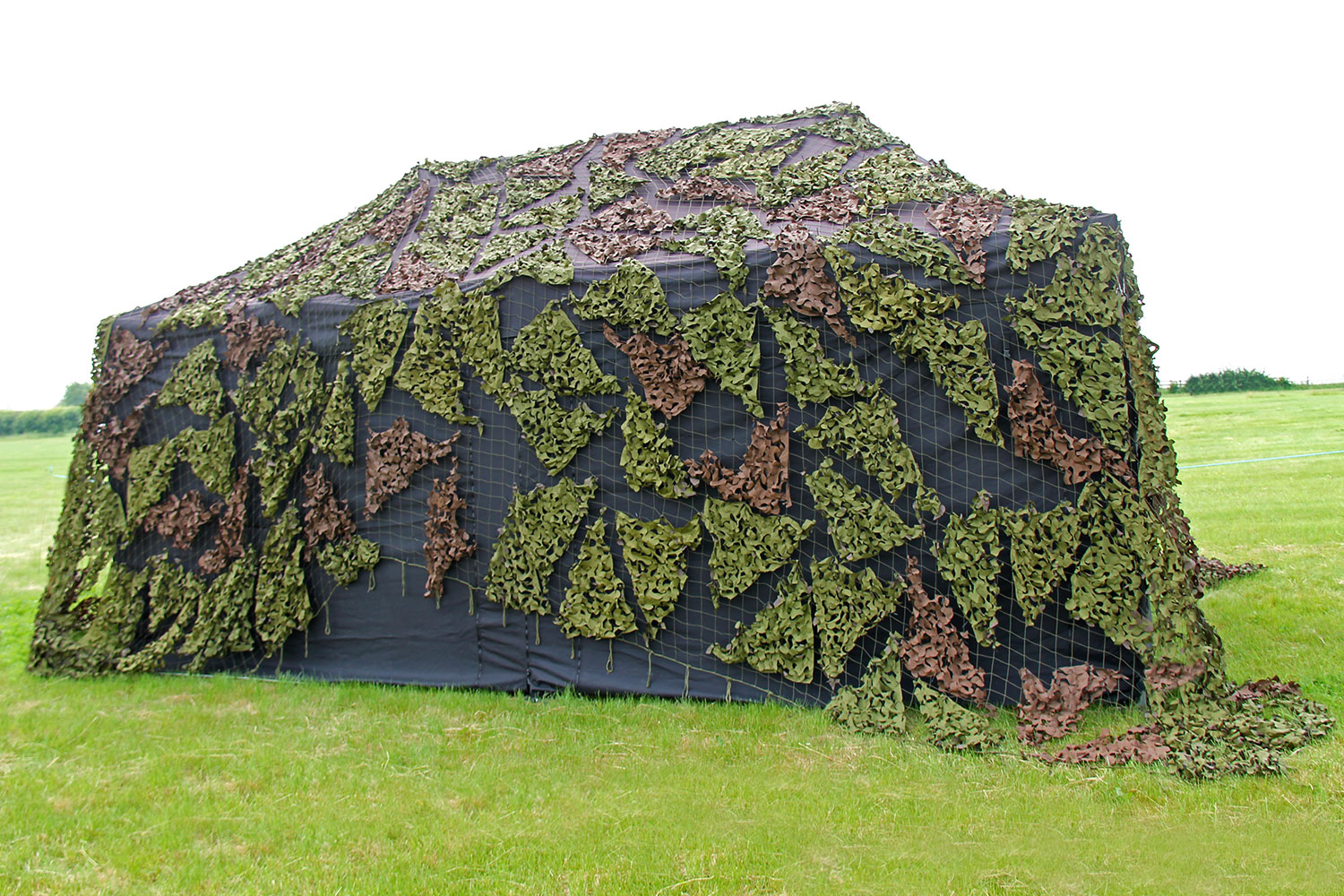
Army camouflage netting is not limited to concealing troops. It is also used to hide military equipment, such as vehicles, artillery, and supplies. By covering equipment with camouflage nets, they become less visible to the enemy, reducing the risk of detection.
Creating Authentic Scenes
Camouflage netting is often used in film and theatre productions to create authentic scenes depicting military operations. Using camouflage patterns and techniques used by armed forces, filmmakers can enhance the realism of their story.
Concealment Tips
For persons interested in camouflage techniques, there are several tips to keep in mind. First, it is crucial to consider the environment in which concealment is desired. Different patterns and colour schemes work better in specific settings. Secondly, understanding the purpose of camouflage, which is to break up the outline and blend into the surroundings. Lastly, trying different types of camouflage netting and techniques can help refine concealment skills.